
Aviation
Boeing, Cranfield University, West African Aviation Regulators Forge Partnership to Strengthen Safety Oversight By Raymond Enoch

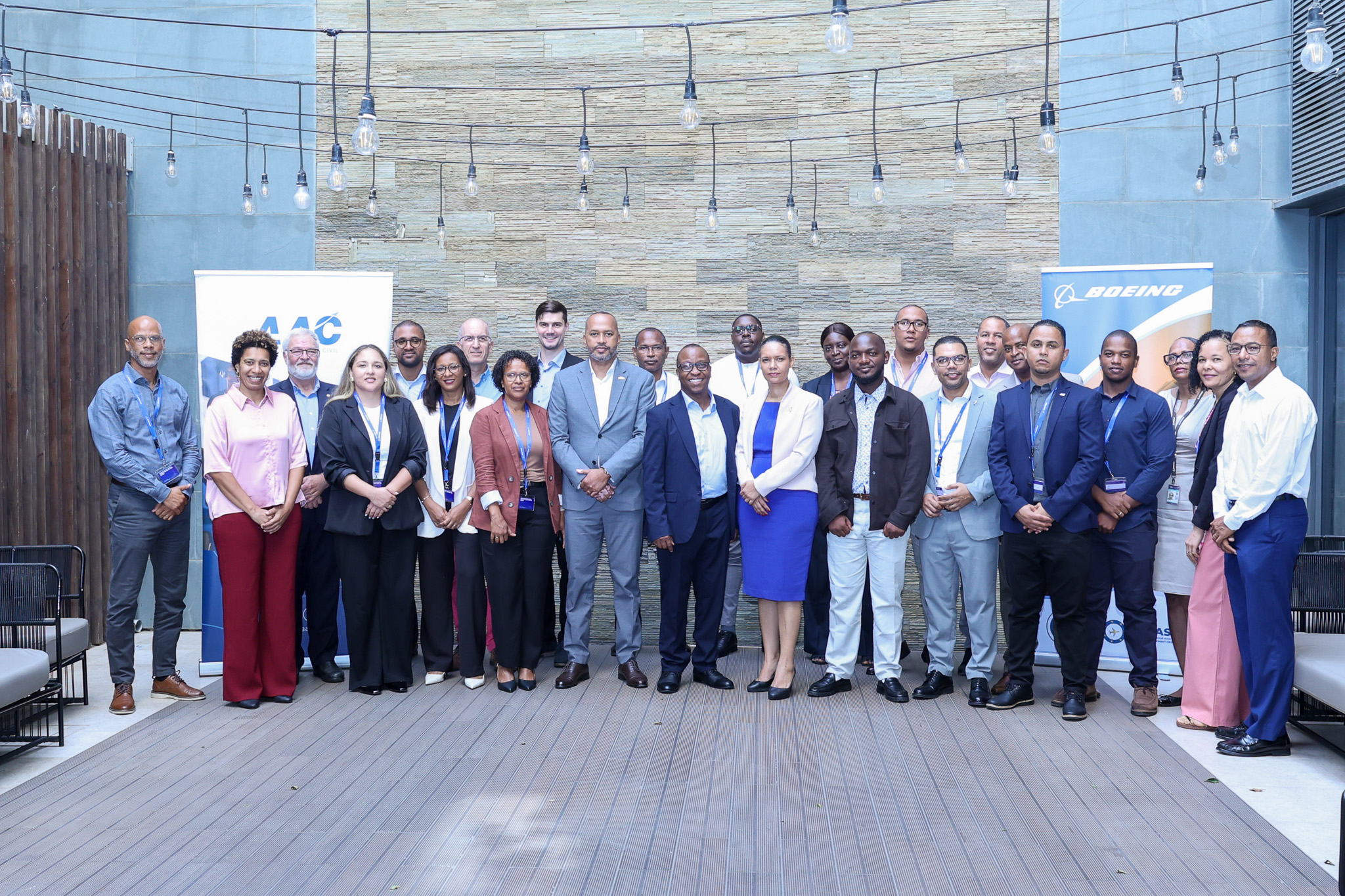
G obal aircraft manufacturer Boeing and Cranfield University of the United Kingdom have partnered with aviation regulatory authorities across West Africa to strengthen safety oversight, improve regulatory capacity and promote harmonised standards across the region’s aviation industry.
The partnership, being implemented through a five-day Regulatory Excellence Workshop in Praia, Cabo Verde, brings together 24 aviation professionals from civil aviation authorities and airlines across West Africa for intensive training, knowledge-sharing and discussions on emerging safety challenges.
The workshop is jointly hosted by Boeing, Cranfield University, the Banjul Accord Group Aviation Safety and Security Oversight Organization (BAGASOO) and Cabo Verde’s Civil Aviation Agency (AAC), reflecting growing collaboration between the aviation industry, academic institutions and regulators to enhance operational safety.
The initiative comes as Africa prepares for significant aviation growth, placing renewed emphasis on the ability of national regulatory authorities to keep pace with technological advancements, expanding fleets and increasingly complex flight operations.
Boeing’s Safety and Regulatory Partnerships Director for Africa, the Middle East, Türkiye, Central Asia and Europe, Kayode Ariwodola, said the programme demonstrates the importance of cross-border cooperation in strengthening aviation regulation and building a more integrated regional aviation ecosystem.
He noted that sustained engagement between government regulators and industry stakeholders was essential to developing professional networks capable of supporting safe and efficient growth in air traffic.
According to Ariwodola, the workshop provides an opportunity for aviation professionals to exchange experiences, address shared challenges and strengthen regulatory capabilities across national boundaries.
BAGASOO Executive Director Jailza Soraya Rodrigues Silva said the changing nature of aircraft technology and aviation operations requires civil aviation authorities to continuously improve institutional capacity and update their regulatory systems.
She explained that effective safety oversight depends on regulators’ ability to share knowledge, anticipate emerging risks and maintain the technical expertise required to supervise an evolving industry.
Silva said the collaboration with Boeing and Cranfield University was designed to translate these priorities into practical learning opportunities that would strengthen the capacity of BAGASOO member states to sustain effective aviation safety oversight.
The five-day programme features technical sessions delivered by subject-matter experts from Boeing and Cranfield University, covering regulatory standards, safety management systems, accident investigation, emergency response and disruption management.
Participants are also examining the introduction of new aircraft systems, operational requirements, specialised regulatory approvals and strategies for improving engagement among aviation stakeholders.
Beyond technical training, the workshop addresses safety culture, leadership and change management, recognising that effective aviation oversight requires not only regulatory knowledge but also strong institutions, competent personnel and a commitment to continuous improvement.
The interactive format is intended to encourage peer-to-peer learning and strengthen professional relationships among aviation authorities and industry representatives across West Africa.
For a region seeking to deepen economic integration, expand air connectivity and improve the movement of people and goods, stronger cooperation among aviation regulators remains an important component of efforts to develop a safer and more efficient air transport network.
The workshop also builds on previous collaboration between Boeing and Cranfield University to strengthen aviation safety regulation on the continent.
In 2025, both organisations partnered with the East African Community Civil Aviation Safety and Security Oversight Agency and the Uganda Civil Aviation Authority to organise a similar regulatory excellence workshop for East African aviation authorities.
The expansion of such initiatives across different African regions highlights the importance of developing regulatory expertise and sharing best practices as the continent’s aviation market grows.
Boeing’s Global Learning Institute, which provides learning and talent-development opportunities to its operators worldwide, is also contributing to the broader industry effort to equip aviation professionals with the skills needed to address evolving operational demands.
The company said its engagement with African airlines and regulators includes tailored training in safety, airline economics and leadership.
According to Boeing’s Commercial Market Outlook, Africa’s aircraft fleet is expected to more than double over the next 20 years, a projection that underscores the need for sustained investment in regulatory competence, safety management and technical capacity.
Boeing, which says it has supported African aviation for more than seven decades, estimates that its aircraft account for nearly 70 per cent of the continent’s market. The company maintains offices in Ethiopia and South Africa, alongside field service representatives supporting airlines across Africa.
Meanwhile, BAGASOO continues to promote the safe and efficient development of civil aviation through regional cooperation among its seven member states: Cabo Verde, The Gambia, Ghana, Guinea, Liberia, Nigeria and Sierra Leone.
Cranfield University, a UK postgraduate institution known for its work in aviation, engineering, technology and management, brings academic expertise and practical research experience to the partnership.
The Praia workshop therefore represents more than a technical training exercise. It provides a platform for strengthening institutional relationships, sharing regulatory experience and preparing West African aviation authorities for the safety demands associated with future industry expansion.
As African countries pursue greater regional connectivity and improved aviation services, the effectiveness of regulatory institutions will remain central to building public confidence, protecting passengers and supporting sustainable growth.
The partnership between Boeing, Cranfield University and West African aviation authorities signals a continued push towards stronger safety oversight, deeper professional collaboration and improved regulatory readiness across the region.


