
News
ECOWAS Regional Pre-Election Mission Opens High-stakes consultations in Abuja, puts electoral credibility, political inclusion and democratic stability Ahead of Nigeria’s next Presidential election By Raymond Enoch

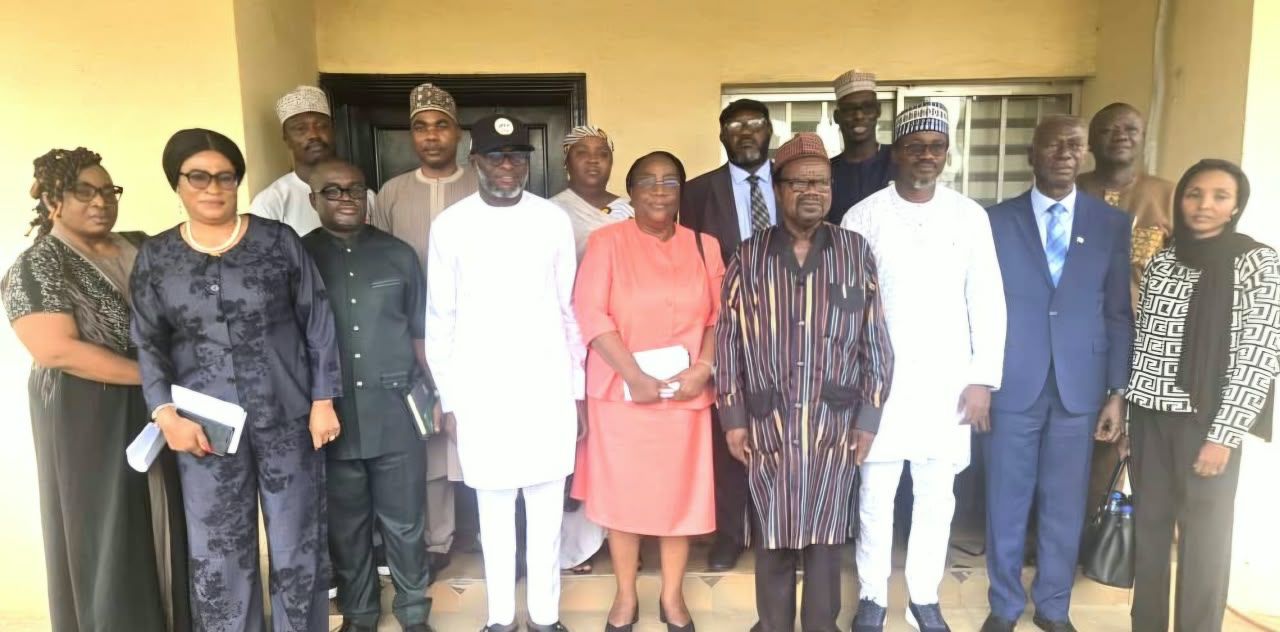
With Nigeria’s 2027 general elections approaching, the Economic Community of West African States (ECOWAS) has deployed a high-level pre-election fact-finding mission to assess the country’s electoral preparedness, identify potential sources of political tension and engage key stakeholders on measures to prevent a disputed election from threatening democratic stability.
The five-day mission, which commenced on October 26 and is scheduled to conclude on October 30, 2026, comes at a critical moment for Nigeria’s democratic institutions, as concerns over electoral credibility, public confidence in the electoral umpire, political violence, vote buying and the enforcement of electoral laws increasingly shape discussions about the country’s next electoral cycle.
Led by former Vice-President of Sierra Leone, H.E. Victor Bockarie Foh, the mission has begun consultations with political parties and other stakeholders, including the Inter-Party Advisory Council (IPAC), in what could become an important early test of Nigeria’s capacity to deliver peaceful, credible, transparent and inclusive elections in 2027.
The regional intervention is particularly significant given Nigeria’s strategic position in West Africa. As the region’s most populous country and one of its principal political and economic powers, Nigeria’s electoral outcomes have implications extending beyond its national borders, touching on regional stability, democratic governance, security cooperation and the credibility of constitutional government across the sub-region.
However, the mission’s immediate challenge is not simply to determine whether Nigeria has the institutional structures required to conduct elections, but also to establish whether political actors, electoral institutions, security agencies and voters have sufficient confidence in the process to accept its outcome.
The issues raised during the mission’s first engagement with IPAC suggest that the road to the 2027 polls will require more than routine preparations.
According to information released by the ECOWAS Commission, the mission was deployed pursuant to Article 13 of the Supplementary Protocol on Democracy and Good Governance, Article 53(c) of the ECOWAS Conflict Prevention Framework, and a decision of the Authority of Heads of State and Government to send pre-election fact-finding missions to member states holding elections.
These instruments provide the regional framework for engaging member states on democratic governance, conflict prevention and electoral processes.
The mission is expected to examine Nigeria’s level of preparedness for the forthcoming general elections, engage political party leaders and coalitions, meet government institutions and the electoral management body, consult civil society organisations, and collect relevant legal texts governing the 2027 electoral process.
It will also gather information concerning the conditions under which the elections will be conducted, the circumstances of opposition candidates and the broader political atmosphere in the build-up to the polls.
The findings are expected to help ECOWAS develop a clearer understanding of the opportunities and challenges confronting Nigeria’s electoral process and identify areas where preventive diplomacy and stakeholder engagement may help reduce the risk of election-related disputes.
The delegation includes Madam Francess Piagie Alghali, ECOWAS Commissioner for Political Affairs, Peace and Security; H.E. Julius Fofanah Sandy, Sierra Leone’s High Commissioner to Nigeria and Permanent Representative to ECOWAS, representing the ECOWAS Permanent Representatives’ Committee; and Mr Serigne Mamadou Ka, Head of the Electoral Assistance Division at the ECOWAS Commission.
Other members include Mr Ebenezer Asiedu, Head of Democracy and Good Governance; Dr James Aji, Head of the United Nations Office for West Africa and the Sahel (UNOWAS) Liaison Cell to ECOWAS; electoral experts from Ghana and Côte d’Ivoire; and officials drawn from ECOWAS directorates and specialised structures responsible for communications, political affairs, peace and security, electoral networks and early warning.
The composition of the delegation reflects the mission’s multidisciplinary approach, combining political and electoral expertise with regional conflict-prevention and institutional perspectives.
Yet, the effectiveness of the exercise will ultimately depend on the quality of the information gathered, the openness of the consultations and the willingness of relevant institutions to address concerns identified during the consultations with the ECOWAS Mission.
The mission’s first reported stakeholder engagement on October 26 brought it face-to-face with IPAC, a platform representing political parties and a key participant in discussions on Nigeria’s electoral reforms.
At the meeting, IPAC representatives raised concerns about public confidence in electoral institutions, particularly the perceived independence of the Independent National Electoral Commission (INEC), transparency in appointments to its leadership and the extent to which political parties’ recommendations have influenced electoral reforms.
The concerns place institutional trust at the centre of the debate ahead of 2027.
Although the existence of an electoral commission is fundamental to constitutional democracy, the public’s perception of its independence can be equally consequential in determining whether competing political interests regard the process as fair.
An electoral body may possess legal authority and operational structures, but where political parties or sections of the electorate suspect that appointments, procedures or decisions are influenced by partisan considerations, the credibility of its work may come under pressure.
IPAC therefore called for more transparent and inclusive procedures for appointing electoral officials, alongside reforms to candidate nomination processes and concerns surrounding the high cost of political party primaries.
The council also questioned the fairness of electoral rules and their application, underscoring the importance of ensuring that political parties operate under clear and consistently enforced regulations.
These are concerns raised by IPAC during its engagement with the ECOWAS delegation; they should not, in themselves, be interpreted as established findings of misconduct by INEC.
Nevertheless, their inclusion in the mission’s consultations highlights the importance of examining not only the legal independence of electoral institutions but also the confidence political stakeholders place in their decisions.
For ECOWAS, the challenge will be to distinguish between legitimate institutional concerns requiring attention, partisan allegations that require verification and systemic weaknesses that could undermine the process if left unresolved.
The distinction matters because electoral credibility depends on evidence, transparent procedures and impartial enforcement rather than political assurances alone.
Beyond institutional trust, IPAC raised concerns about vote buying and the vulnerability of voters facing economic hardship.
The relationship between poverty and electoral manipulation remains a serious governance challenge in Nigeria, where economic vulnerability can make some citizens more susceptible to financial inducements during campaigns and on election day.
Vote buying does more than influence individual voting decisions. It can distort political competition, weaken accountability and create incentives for candidates to view elections as investments to be recovered after gaining public office.
Where electoral success is associated with the ability to distribute money or material benefits, policy debates, public service commitments and candidates’ records may receive less attention than financial inducements.
The consequences can extend beyond election day, potentially reinforcing patronage networks and weakening the relationship between elected officials and the citizens they represent.
IPAC also expressed concern about inflammatory political rhetoric and what it described as perceived weaknesses in the enforcement of sanctions against electoral violations.
Participants called for consistent investigations and appropriate sanctions against offenders, regardless of their political affiliations.
This demand raises a fundamental question for the 2027 electoral cycle: will electoral laws be enforced consistently enough to deter violations, irrespective of the political influence of those implicated?
For a credible election, the answer must be demonstrated through transparent investigations, lawful proceedings and proportionate sanctions where violations are established.
Public statements condemning vote buying or political violence will have limited impact if the institutions responsible for enforcement are unable to investigate allegations effectively and apply the law impartially.
The ECOWAS mission’s consultations therefore offer an opportunity to examine how electoral offences are addressed, how complaints are handled and whether existing institutional arrangements provide sufficient deterrence.
However, the responsibility for enforcing Nigeria’s laws remains with the relevant Nigerian institutions. ECOWAS’s role in this exercise is to assess the electoral environment, facilitate dialogue and support preventive measures within its regional mandate.
Political security emerged as another important issue during the IPAC engagement.
The council called for professional, impartial and adequate security arrangements to protect political actors and ensure that all parties can exercise their democratic rights without fear or undue restriction.
The concern goes beyond the deployment of personnel to polling stations.
A secure electoral environment must also enable candidates to campaign freely, political parties to organise meetings, citizens to participate in public debate and voters to make their choices without intimidation.
Where political actors face threats, campaign activities are disrupted or security responses are perceived as selective, the resulting atmosphere can undermine participation and deepen mistrust.
The challenge is particularly important in a politically competitive environment where inflammatory rhetoric, local disputes and competition for power may create flashpoints before, during or after voting.
Effective electoral security requires coordination among security agencies, electoral authorities, political parties, civil society organisations and community stakeholders.
It also requires clear operational guidelines, respect for fundamental rights, timely responses to credible threats and accountability for misconduct.
The mission’s early engagement with IPAC indicates that these questions will form part of the broader assessment of Nigeria’s preparedness.
For ECOWAS, identifying potential risks before they escalate is central to the preventive diplomacy underpinning its deployment.
Responding to the issues raised by IPAC, the head of the mission, Foh, emphasised the need for sustained dialogue among political parties, INEC, security agencies and civil society organisations.
He described preventive engagement as an important means of addressing emerging concerns before they develop into broader disputes.
The position reflects a central principle of election-related conflict prevention: grievances are often easier to address when communication channels remain open and stakeholders can seek clarification or corrective action before tensions become entrenched.
Dialogue can help political parties understand electoral procedures, communicate concerns to the relevant authorities and develop shared expectations regarding acceptable political conduct.
It can also provide an avenue for identifying weaknesses in dispute-resolution mechanisms and encouraging stakeholders to use lawful procedures rather than resort to confrontation.
However, dialogue alone cannot resolve every electoral problem.
Its effectiveness depends on whether the concerns raised receive serious consideration, whether institutions respond with credible information and whether agreed actions translate into measurable improvements.
For the ECOWAS mission, the task is therefore to encourage engagement while gathering sufficient information to assess the institutional, legal and political conditions surrounding the forthcoming elections.
The mission’s findings could help shape subsequent regional engagement, although no conclusions about Nigeria’s readiness or the credibility of the 2027 elections should be drawn before the assessment is completed.
Nigeria’s electoral process carries considerable weight within West Africa because of the country’s population, economic influence, diplomatic reach and involvement in regional peace and security initiatives.
Its experience also forms part of a wider debate about democratic resilience across the continent, where elections remain a principal mechanism for transferring political authority but are often accompanied by disputes over institutional independence, constitutional rules, campaign conduct and the credibility of results.
For ECOWAS, the deployment comes against the broader responsibility of protecting democratic governance and preventing political crises from destabilising member states.
The organisation’s engagement in Nigeria also demonstrates the importance of regional institutions in supporting domestic electoral processes without displacing national responsibility.
Nigeria’s institutions remain responsible for administering the elections, enforcing national laws and resolving disputes through the established constitutional and legal framework.
ECOWAS, meanwhile, can provide a regional perspective, facilitate consultations, identify potential flashpoints and encourage measures consistent with its democracy and conflict-prevention instruments.
The distinction is important. Regional engagement is most effective when it reinforces domestic institutions, encourages transparency and supports peaceful competition without creating the impression that national sovereignty or the authority of lawful institutions has been displaced.
There is also a broader regional interest in ensuring that electoral competition does not undermine cooperation among West African states.
Political instability in a country of Nigeria’s size could have implications for cross-border trade, migration, security cooperation and regional economic integration.
Conversely, a peaceful and credible electoral process could strengthen confidence in constitutional government and reinforce the case for democratic institutions as mechanisms for resolving political competition.
The stakes are therefore both national and regional.
The ECOWAS mission has opened an important window for examining Nigeria’s electoral preparations, but the value of the exercise will depend on what follows the meetings.
The delegation’s assessment must go beyond collecting assurances from political leaders and institutions. It must establish a balanced picture of the legal framework, institutional readiness, stakeholder concerns and risks that could affect the conduct of the elections.
That includes examining the applicable electoral laws, the preparedness of the electoral management body, the accessibility and fairness of political participation, the security environment and the mechanisms available for addressing disputes.
It also requires listening to perspectives beyond political party leadership, including civil society organisations and other relevant stakeholders whose experiences may reveal practical barriers to participation or weaknesses in public confidence.
The mission’s five-day schedule places a premium on focused consultations and careful evaluation of the information presented.
While the immediate exercise is fact-finding rather than an election-day observation mission, its findings may help identify issues requiring attention well before voting begins.
The early timing is significant because preventive measures are generally more useful when institutions have sufficient time to review procedures, address credible concerns and strengthen coordination.
Electoral preparation should not be reduced to logistics alone. Ballot materials, technology, staffing and operational planning are essential, but the political environment in which these arrangements function is equally important.
A technically organised election can still face a crisis of legitimacy if significant stakeholders distrust the rules or believe that violations are being tolerated.
Likewise, a politically competitive election can remain peaceful when institutions are trusted, disputes are handled transparently and parties accept the need to operate within the law.
The mission’s engagement with IPAC has brought these interconnected questions into focus.
As Nigeria moves towards the 2027 general elections, the issues raised during the ECOWAS mission’s opening consultations point to a contest that will be judged not only by the final results but also by the credibility of the process that produces them.
Institutional independence, transparent appointments, fair nomination procedures, political security, enforcement against vote buying and inclusive engagement are not isolated concerns. Together, they shape the environment in which citizens exercise their democratic rights and political parties compete for power.
The coming months will test the capacity of Nigeria’s institutions and political actors to address these questions through lawful, transparent and credible processes.
For ECOWAS, the mission presents an opportunity to support preventive diplomacy and reinforce the principle that electoral disputes are best addressed through dialogue, evidence and established legal mechanisms before they become threats to peace.
For Nigeria, the greater responsibility lies at home: building confidence in the institutions that administer elections, protecting political participation and ensuring that electoral rules apply consistently to all contenders.
Ultimately, the credibility of the 2027 elections will not be determined by the presence of an international mission or the number of consultations conducted. It will depend on the conduct of the relevant institutions, the freedom of political competition, the protection of voters and the willingness of all actors to respect the law.
The central question is no longer simply whether Nigeria is preparing for another election, but whether the country can strengthen public confidence in the process early enough to ensure that the competition for power does not become a contest over the legitimacy of the state itself.
For West Africa, that is a question with consequences far beyond Nigeria’s borders.


