
News
ECOWAS, AU Mobilise West Africa’s Youth for Peace, Security, Holds Regional consultation in Accra targets implementation gaps towards 2029 and beyond By Raymond Enoch

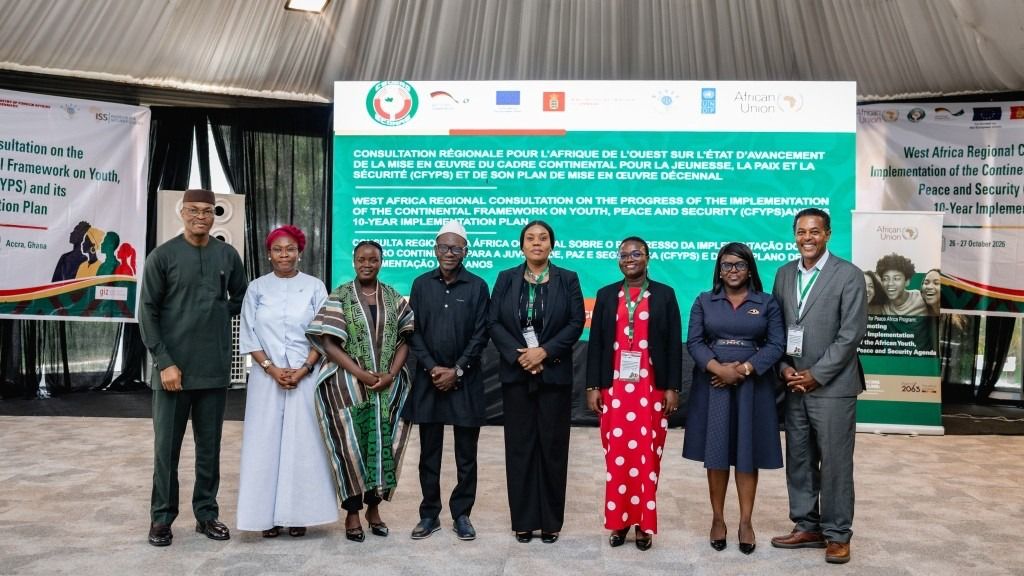
The Economic Community of West African States (ECOWAS), the African Union Commission (AUC) and the West Africa Network for Peacebuilding (WANEP) have intensified regional efforts to place young people at the centre of peacebuilding, conflict prevention and security governance across West Africa.
The three organisations convened a two-day West Africa Regional Consultation in Accra, Ghana, from October 26 to 27, to assess progress in implementing the Continental Framework on Youth, Peace and Security (CFYPS) and its 10-year implementation plan, while identifying practical measures to strengthen youth participation in sustaining peace across the continent.
The consultation comes amid growing recognition that young people must be regarded not merely as victims of armed conflict, political instability and insecurity, but as essential partners in designing and implementing solutions to the challenges confronting their communities and countries.
Convened under the ECOWAS Commission’s Department of Political Affairs, Peace and Security, the meeting brought together regional and continental stakeholders to examine achievements recorded so far, identify persistent implementation gaps, document successful initiatives and develop evidence-based recommendations to advance the Youth, Peace and Security (YPS) agenda through 2029 and beyond.
The initiative is receiving technical and financial support from Germany, the European Union and Denmark through two German development cooperation-supported programmes: the Support to the African Union for Promoting Peace, Security and Governance in Africa (AUPSG), implemented by GIZ, and the EU Support to ECOWAS in Peace, Security and Governance (EPSG) project.
Beyond reviewing existing commitments, the consultation provides an opportunity to examine the extent to which policies on youth inclusion are translating into meaningful participation in peace processes, conflict prevention mechanisms and security decision-making at continental, regional and national levels.
For West Africa, where insecurity, political tensions and violent conflicts continue to test the resilience of communities and regional institutions, the effectiveness of youth engagement remains critical to building sustainable peace.
Young people possess local knowledge, social networks, technological skills and community influence that can contribute significantly to early warning, mediation, countering disinformation, preventing violent extremism and rebuilding trust between communities and public institutions.
However, translating these capacities into measurable outcomes requires more than policy declarations. It demands sustained investment, institutional support, access to decision-making platforms and mechanisms that enable young people to participate meaningfully in peace and security initiatives.
The Accra consultation is therefore expected to help identify the obstacles preventing the full implementation of the continental framework and recommend practical measures to close the gaps between policy commitments and realities on the ground.
Its emphasis on evidence-based recommendations also underscores the importance of monitoring progress, sharing successful approaches across countries and ensuring that youth-led peacebuilding initiatives receive the recognition and support necessary to achieve lasting impact.
The partnership between ECOWAS, the African Union and WANEP further highlights the importance of coordinated regional action in advancing the Youth, Peace and Security agenda, particularly in a region where security challenges frequently transcend national boundaries.
With support from Germany, the European Union and Denmark, the initiative also demonstrates the role of international partnerships in strengthening African-led approaches to peace, security and governance.
Ultimately, the significance of the Accra meeting will be measured not only by the recommendations it produces but also by how effectively those recommendations influence policies, funding priorities and practical interventions in the years ahead.
As ECOWAS and its partners look towards 2029 and beyond, the central challenge is to move youth inclusion from a recognised principle to an operational reality—one in which young people have the resources, institutional access and genuine authority to help shape the peace and security future of West Africa and the African continent.


