
News
Keita Urges Journalists to Provide Context, Ensure Public Debate Is Driven by Evidence, Not Speculation By Isatou Jawara

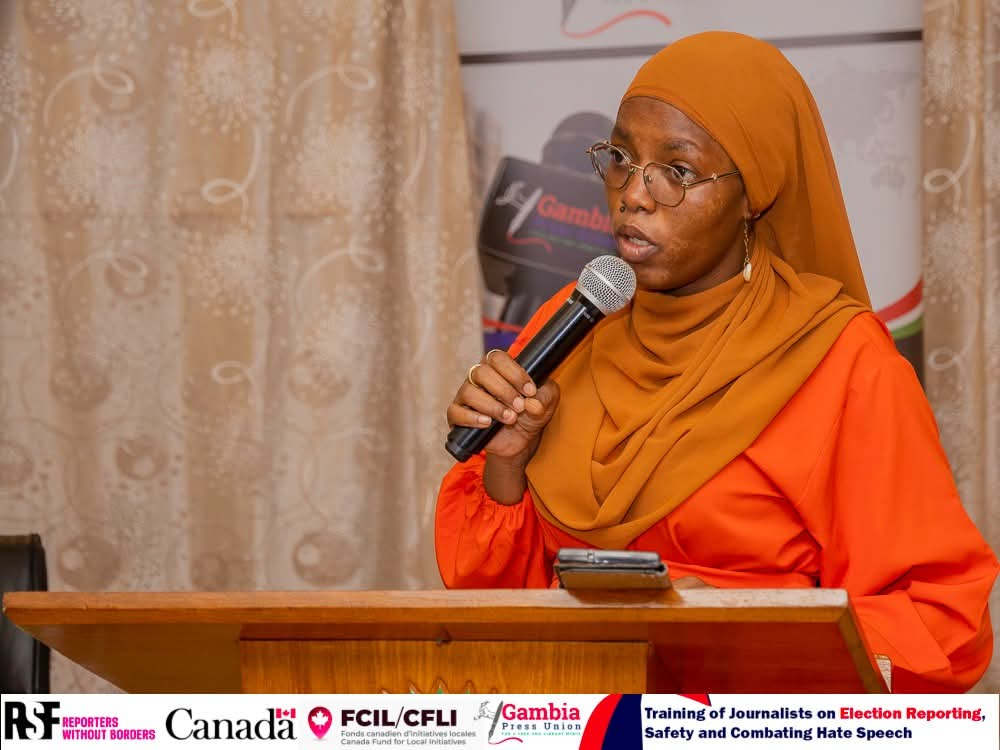
With disinformation and hate speech emerging as major challenges ahead of The Gambia’s next electoral cycle, President of the Gambia Press Union (GPU), Isatou Keita, has urged journalists to strengthen evidence-based reporting, provide context and resist the spread of speculation capable of misleading the public and undermining informed democratic debate.
Keita made the call as the GPU, in collaboration with Reporters Sans Frontières (RSF), commenced a three-day training programme aimed at equipping 25 Gambian journalists with the skills to identify and counter election disinformation, report safely and protect the public from misleading narratives.
The training, which began on Monday, October 26, brought together journalists from print and electronic media at a hotel in Kololi, with support from the Canada Fund for Local Initiatives.
The initiative comes against the backdrop of growing concerns over the influence of disinformation, online abuse and inflammatory rhetoric on electoral processes, placing increased responsibility on journalists to distinguish verified information from falsehoods and provide citizens with credible information for informed decision-making.
Speaking at the opening ceremony, Keita described the training as timely, noting that the approach of another electoral cycle in The Gambia demanded greater commitment to accuracy, responsible journalism and professional accountability.
She stressed that the responsibility of journalists during elections extended beyond simply reporting events to helping citizens understand the issues, separate facts from falsehoods and make sense of competing claims.
“During elections, citizens rely on journalists not just for information, but for clarity,” Keita said, urging journalists to provide context and ensure that public debate was informed by evidence rather than speculation.
She warned that the media landscape was becoming increasingly difficult to navigate, with the rapid circulation of disinformation, rising online abuse, declining public trust in institutions and mounting pressures associated with election coverage presenting serious challenges to professional journalism.
“Disinformation spreads rapidly. Online abuse has become more common. Public trust in institutions is constantly tested, and reporting on elections often places journalists under immense pressure,” she said.
According to her, the changing information environment makes continuous professional development and institutional support indispensable, as conventional journalistic skills alone may no longer be sufficient to confront the growing sophistication of disinformation and other emerging threats.
Keita reaffirmed the GPU’s commitment to defending press freedom, strengthening professional standards and building partnerships that would enable journalists to discharge their responsibilities without intimidation or fear.
She also welcomed the collaboration with RSF, describing it as the first formal partnership between the two organisations and expressing optimism that it would provide a foundation for sustained cooperation and future initiatives.
In his remarks, Information Minister, Dr Ismaila Ceesay, described disinformation as a growing global challenge, particularly in electoral processes, where its intersection with hate speech could complicate public discourse and the conduct of democratic exercises.
He welcomed the international partners and participating journalists, urging them to take full advantage of the three-day programme and translate the knowledge acquired into improved professional practices within their respective newsrooms.
Ceesay emphasised that the media’s responsibility becomes particularly critical as the country approaches another electoral period, calling on journalists to uphold accuracy, prioritise public interest and ensure their personal safety while covering politically sensitive developments.
The programme is expected to strengthen participants’ capacity in information verification, identification of disinformation, responsible reporting on hate speech and practical safety measures for journalists covering election-related activities.
Beyond the immediate benefits to the 25 participants, the initiative underscores the growing importance of professional journalism in protecting electoral information integrity, particularly at a time when misleading content can travel rapidly across digital platforms and shape public perceptions before verified facts emerge.
As The Gambia moves towards another electoral cycle, the central challenge for the media will be to ensure that political competition does not become an avenue for the manipulation of public information, but an opportunity for citizens to engage with facts, scrutinise competing positions and make informed democratic choices.


