
News
Ambassador Zainab Mohammed calls for equality, protection of citizens’ rights, Warns Against intimidation and Political victimisation, Urged Tinubu to Uphold Justice By Raymond Enoch

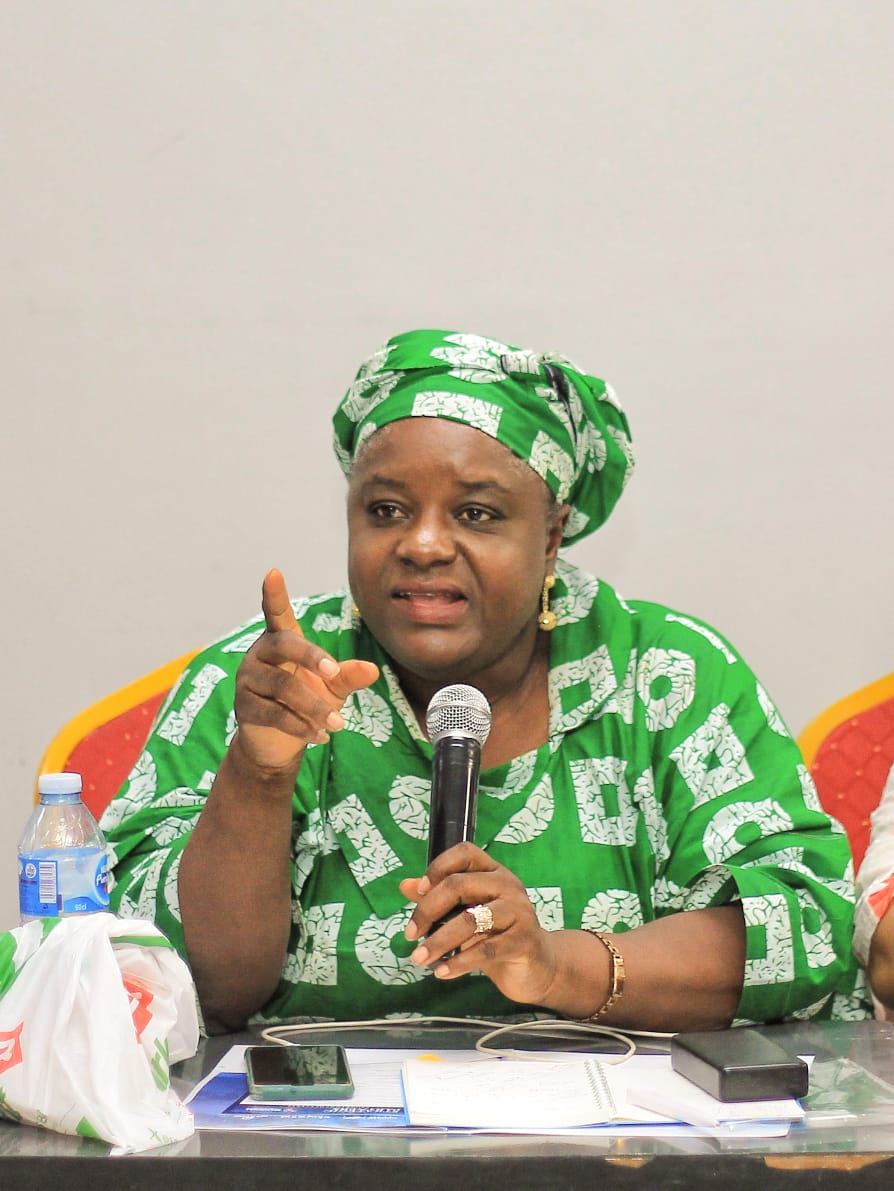
Chief Ambassador Zainab Mohammed has called on President Bola Ahmed Tinubu and other Nigerian leaders to demonstrate a stronger commitment to justice, equality and the protection of citizens’ fundamental rights, warning that the country must move beyond singing the national anthem to practising its values.
Mohammed, in a strongly worded public statement titled “Nigeria’s National Anthem: A Call for Justice, Equality, and an End to Oppression,” made available to Paradigm News, said the ideals expressed in the national anthem must be reflected in governance, leadership conduct and the treatment of citizens across the country.
She particularly drew attention to the third stanza of Nigeria’s restored national anthem, “Nigeria, We Hail Thee,” which contains the prayer: “Help us to build a nation where no man is oppressed,” describing the declaration as a powerful national commitment to justice, freedom, equality and peaceful coexistence.
According to her, the restoration of the former national anthem by President Tinubu in May 2024, replacing “Arise, O Compatriots,” which had served as Nigeria’s national anthem since 1978, generated considerable public debate but has gradually become part of the country’s renewed expression of patriotism and national identity.
She, however, expressed concern that the realities confronting Nigerians raise serious questions about the country’s commitment to the principles contained in the anthem.
Mohammed lamented that citizens continue to experience intimidation, marginalisation, harassment and oppression in different parts of the country, stressing that such experiences undermine the foundations of a democratic society.
She expressed particular concern about the treatment of citizens during election periods, noting that political differences and the exercise of democratic rights should never provide justification for intimidation, discrimination or the suppression of individual freedoms.
The ambassador reminded public office holders and institutions of government that every Nigerian, irrespective of religion, ethnicity, gender, political affiliation or cultural background, deserves dignity, equal protection under the law and the freedom to participate fully in the democratic process.
She also stressed that constitutional rights to freedom of association, expression and participation in public affairs must be protected without fear of victimisation.
In a direct appeal to the President, political leaders and other authorities, Mohammed raised a fundamental question about the country’s development and democratic journey: whether Nigeria is genuinely building a nation where no citizen is oppressed.
She maintained that the national anthem should not be reduced to a ceremonial composition reserved for official gatherings, political events and public functions, but should serve as a moral compass for leadership and national conduct.
According to her, the words of the anthem must influence government policies, institutional accountability and the everyday relationship between citizens and those entrusted with public authority.
She called on political leaders to embrace fairness, urged security agencies to discharge their responsibilities professionally and without discrimination, and insisted that Nigerians must be allowed to exercise their constitutional rights without intimidation or fear.
Mohammed further emphasised that national unity cannot be achieved through mere patriotic declarations but requires deliberate efforts to guarantee equal opportunities, justice and respect for the rights of all citizens.
She warned against creating an environment in which Nigerians feel excluded or treated as lesser citizens because of their identities, beliefs, political choices or opinions.
Reaffirming the importance of collective responsibility in nation-building, she urged Nigerians to translate the ideals of the national anthem into practical actions, insisting that the country’s aspirations for peace and prosperity depend largely on the commitment of its leaders and citizens to justice and mutual respect.
“Let us move beyond singing the anthem to living its values,” she declared, calling for a Nigeria where justice prevails, freedom is protected and oppression has no place in society.
She concluded with a prayer for national peace, justice and prosperity, invoking God’s blessings upon Nigerian citizens and the Federal Republic of Nigeria.


