
News
NIGERIA RISKS EDUCATION CRISIS WITHOUT PRIORITY INVESTMENT IN TEACHER TRAINING – NCCE BOSS By Raymond Enoch

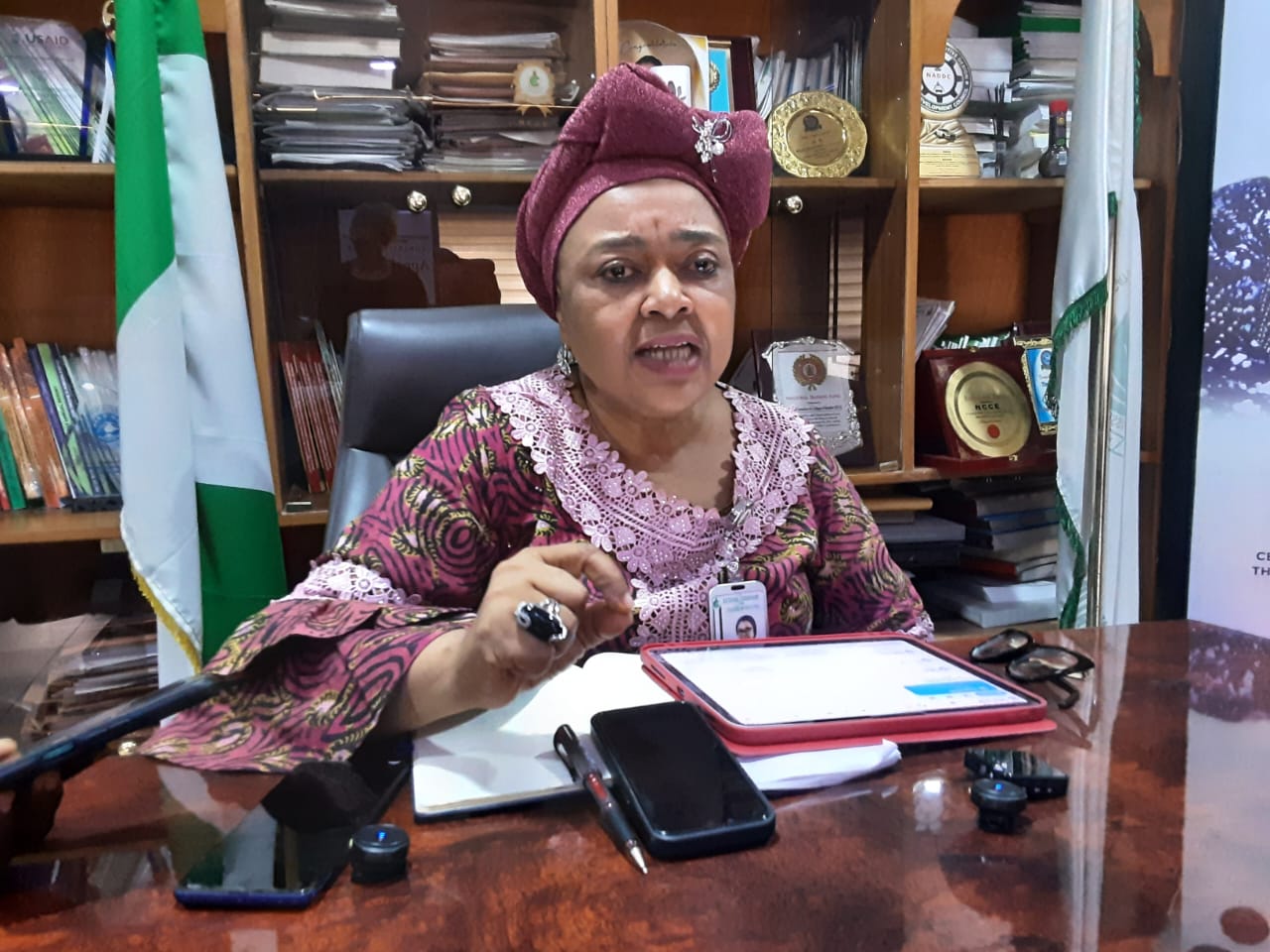
The Executive Secretary of the National Commission for Colleges of Education (NCCE), Dr. Angela Ajala, has warned that Nigeria’s ambition to build a world-class education system and develop competent manpower will remain unattainable without deliberate and sustained investment in teacher education.
Ajala said teacher education must occupy a central position in Nigeria’s national development agenda, insisting that the quality of teachers ultimately determines the quality of professionals, institutions and human capital produced by any country.
Speaking on Tuesday in Abuja during an interview with the Association of Corporate Online Editors (ACOE), the NCCE boss called on the Federal Government, policymakers, development partners and private-sector stakeholders to give teacher training the strategic attention and funding required to transform the nation’s education sector.
“Nigeria cannot build a world-class education system with second-class attention to teacher education. Teacher education must be the priority at the front burner of anything Nigeria wants to do. If you miss it with teacher education, you miss it with Nigeria,” she declared.
The NCCE chief, who described herself as a trained teacher with more than 30 years of professional experience, said the commission was pursuing far-reaching reforms to reposition Colleges of Education, restore public confidence in the teaching profession and equip prospective teachers with the competencies required in a rapidly changing world.
A major component of the reforms, she explained, is the introduction of the dual mandate, which empowers Colleges of Education to award both the Nigeria Certificate in Education (NCE) and Bachelor of Education (B.Ed.) degrees.
She described the policy, signed into law by President Bola Tinubu in 2023, as a significant intervention to reverse declining interest in teacher education, improve the attractiveness of Colleges of Education and strengthen the professional standing of teaching qualifications.
Ajala said the commission was also undertaking a comprehensive review of the teacher education curriculum, shifting from the conventional theory-dominated approach to a competency-based system that places 70 per cent emphasis on practical training and 30 per cent on theoretical instruction.
According to her, the revised curriculum is designed to produce teachers who can translate knowledge into practical solutions while responding effectively to emerging demands in the education and technology sectors.
She disclosed that the curriculum now accommodates emerging disciplines and digital competencies, including Artificial Intelligence, robotics, data analytics, cybersecurity and coding, particularly within Computer Education.
The reforms also provide for skills certification within the five-year academic structure, comprising three years for the NCE and an additional two years for the degree programme.
She said the initiative would enable students to acquire vocational, entrepreneurial and other employable skills alongside their professional teacher training, broadening their economic opportunities beyond classroom teaching.
On funding, Ajala acknowledged that government resources alone would not be sufficient to drive the scale of transformation envisaged by the commission, stressing the importance of strategic partnerships with international development organisations and academic institutions.
She disclosed that the NCCE was working with the European Union, UNESCO and the British Council, while Oxford University was supporting aspects of the reform programme and Cambridge University had also indicated interest in providing assistance.
To ensure that the reforms translate into measurable results, the commission has established a Reform Delivery Unit to monitor implementation, assess progress and provide quarterly reports.
Ajala added that the NCCE was also developing a digital dashboard to track activities and implementation progress across Colleges of Education nationwide, strengthening accountability and enabling the commission to identify areas requiring urgent intervention.
She said the commission’s 2026–2031 Strategic Plan targets the enrolment of at least 80 per cent of Colleges of Education into the dual mandate by 2031.
Beyond institutional reforms, the NCCE boss stressed that Nigeria must deliberately attract a new generation of young people into teaching by improving professional opportunities, strengthening the quality of training and demonstrating the long-term career prospects available within the profession.
She maintained that teaching should no longer be treated as a secondary career option, given its fundamental role in producing the skilled workforce required to drive innovation, economic growth, national competitiveness and sustainable development.
Ajala therefore urged the Federal Government, state governments, development partners, education administrators and other stakeholders to move beyond rhetoric and commit the resources, policies and institutional support necessary to reposition teacher education.
She said investing in teachers was ultimately an investment in Nigeria’s future, emphasising that no nation could build a strong education system or achieve sustainable development without first building the capacity of those entrusted with educating its citizens.


