
News
ECOWAS Mission in Guinea-Bissau Receives Senegalese Military Delegation By Raymond Enoch

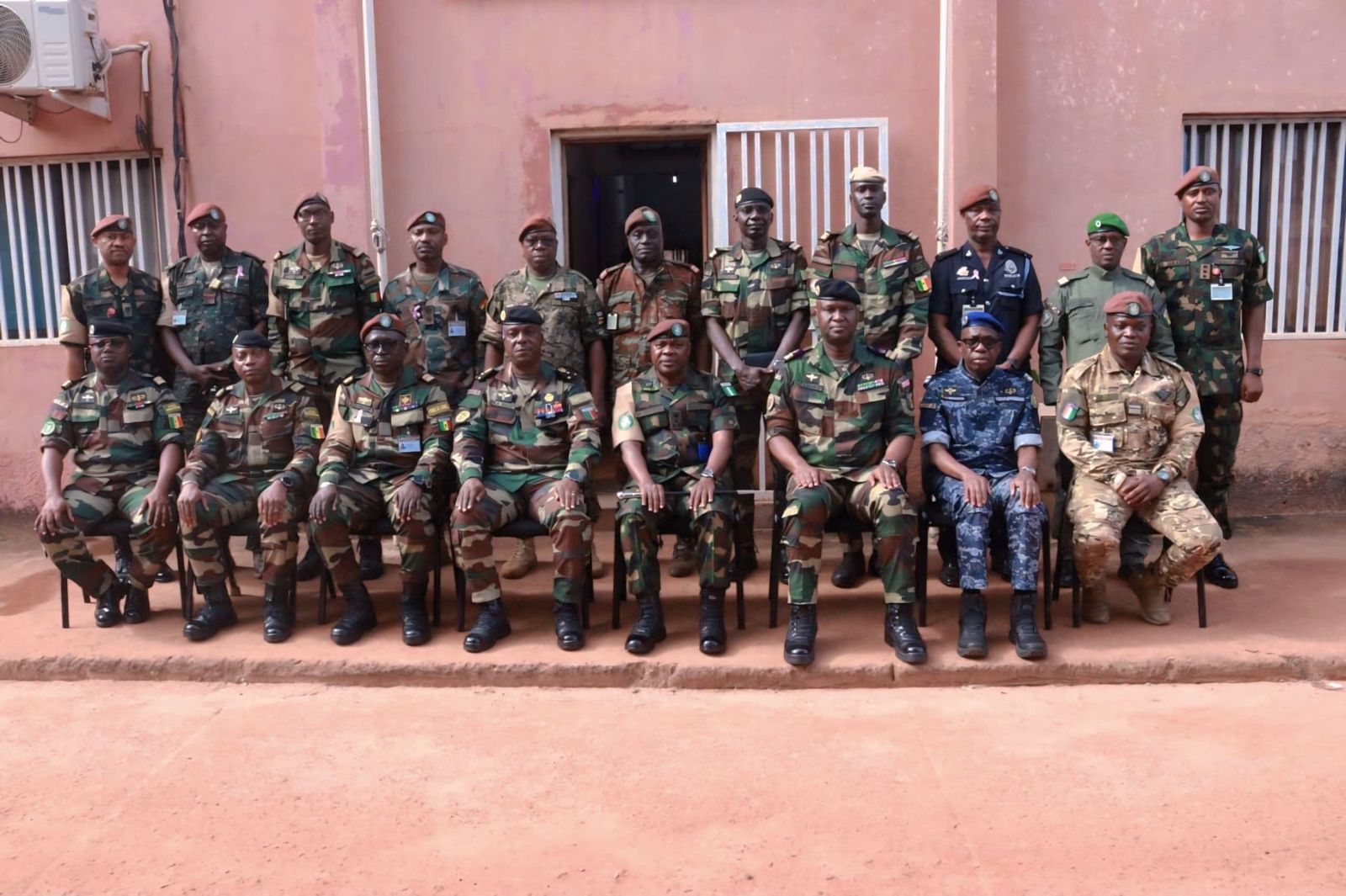
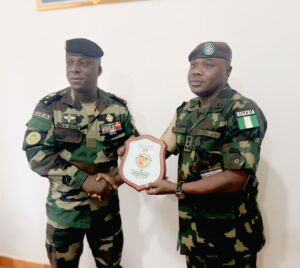
The Force Commander of the Economic Community of West African States (ECOWAS) Stabilisation Support Mission in Guinea-Bissau (ESSMGB), Brigadier General Danjuma Ribah Dantani, has received a delegation of the Senegalese Armed Forces as part of efforts to monitor military personnel deployed in regional and international peace support operations.
The delegation, led by Major General Philippe Dia, Inspector General of the Senegalese Armed Forces, visited the Force Headquarters in Bissau, Guinea-Bissau, on Thursday, October 22, 2026.
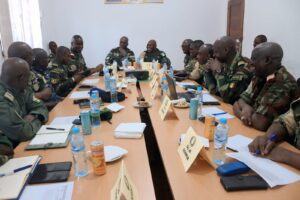
Speaking on the purpose of the visit, Major General Dia disclosed that the delegation was in the country on an inspection mission undertaken at the directive of the President of Senegal.
He explained that the inspection team was mandated to monitor Senegalese military contingents and security personnel deployed in operations under ECOWAS, the African Union (AU), the United Nations (UN) and other operational frameworks.
According to him, the exercise was designed to assess several aspects of the personnel’s engagement, including administration, training, financial management and general operational welfare.
The visit underscores the importance of military coordination, personnel welfare and operational accountability in supporting regional peace and security initiatives, particularly in countries facing persistent political and institutional challenges.
For Guinea-Bissau, the continued presence of the ECOWAS stabilisation mission reflects the regional bloc’s commitment to supporting stability and preventing political tensions from undermining peace, democratic governance and national development.
However, the country’s long-standing political instability raises broader questions about the extent to which military and diplomatic interventions can deliver lasting peace without a corresponding commitment from domestic political actors to democratic principles, constitutional order and inclusive governance.
While the ECOWAS mission represents an important regional security intervention, sustainable stability will ultimately depend on the willingness of Guinea-Bissau’s political leadership and institutions to address the underlying causes of recurring political crises.
The ECOWAS Supplementary Protocol on Democracy and Good Governance, alongside the bloc’s wider frameworks on peace and security, provides principles that should guide political conduct, strengthen democratic institutions and promote peaceful resolution of disputes among competing political interests.
The critical question, therefore, remains: Will ECOWAS’s sustained efforts finally bring lasting peace to Guinea-Bissau? And will the country’s political actors heed the principles of the ECOWAS Supplementary Protocol on Democracy and Good Governance, as well as the regional bloc’s peace and security frameworks, to chart a sustainable path towards political stability, economic progress and national development?


