
Business
H.E. ANTHONY OGUNJIMI VICE PRESIDENT ECOWAS REAFFIRMS COMMITMENT TO DEEPEN COOPERATION, PARTNERSHIP WITH GERMANY, RECEIVES MS. KAREN PFUNDT, HEAD OF DIVISION, WEST AFRICA II, GIZ AT THE COMMISSIONS HEADQUATERS By Raymond Enoch

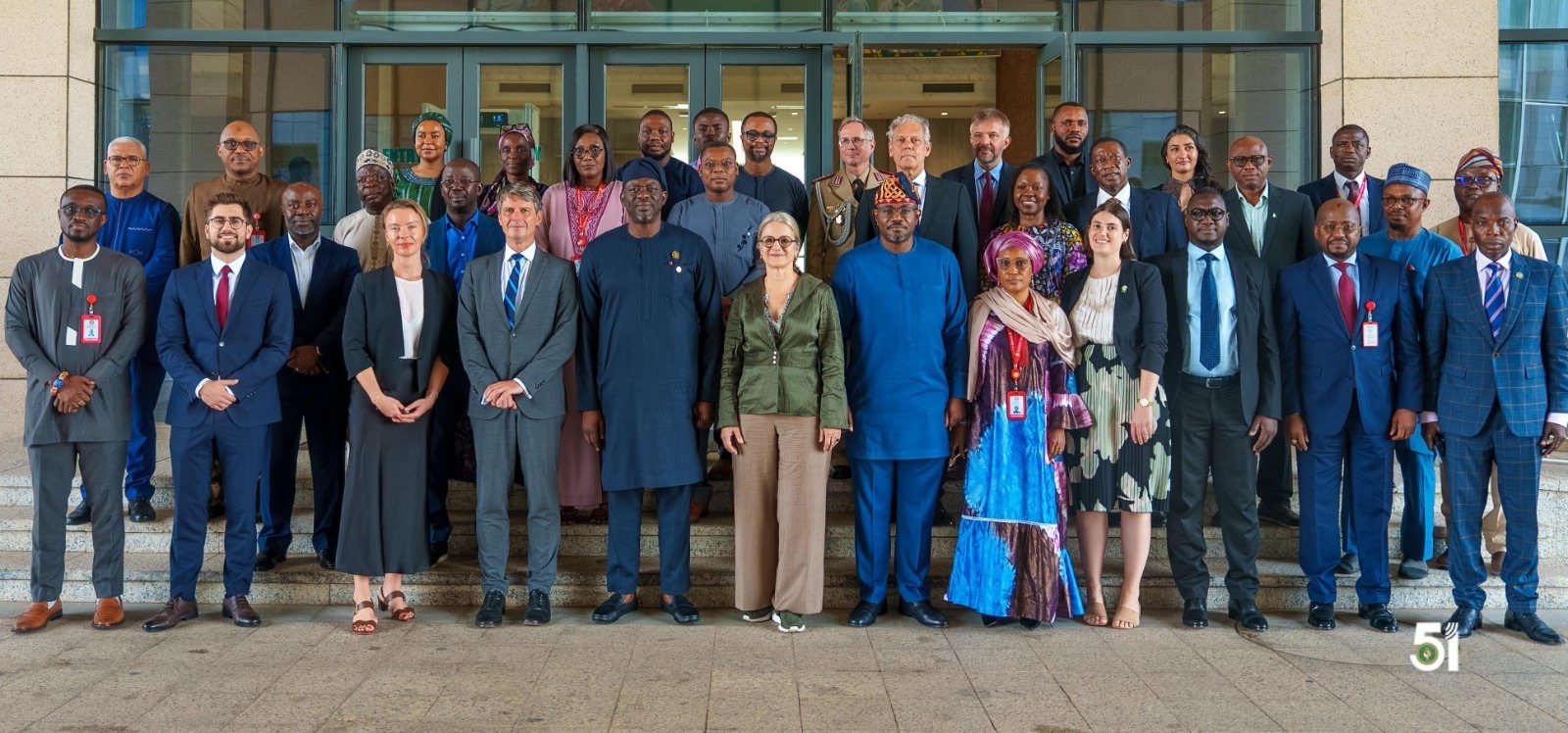
The Economic Community of West African States (ECOWAS) has reaffirmed its commitment to strengthening its longstanding strategic partnership with the Federal Republic of Germany, with renewed emphasis on deepening development cooperation, expanding institutional collaboration and accelerating interventions that advance regional integration and sustainable development across West Africa
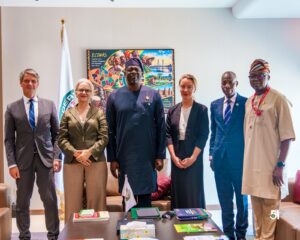
The commitment was reiterated by the Vice President of the ECOWAS Commission, H.E. Anthony Oluwatosin Ogunjimi, during a strategic engagement with Ms. Karen Pfundt, Head of Division, West Africa II, of the German Federal Ministry for Economic Cooperation and Development (BMZ), in Abuja on Tuesday, November 3, 2026.
The high-level engagement, which brought together the German Ambassador to Nigeria and ECOWAS, Stefan Rossel, representatives of BMZ, the German development cooperation agency, Deutsche Gesellschaft für Internationale Zusammenarbeit (GIZ), as well as directors and senior officials of the ECOWAS Commission, provided an important platform for both sides to review their longstanding relationship, exchange perspectives on shared development priorities and explore opportunities for expanding cooperation.
The meeting also marked the inauguration of a new strategic dialogue framework, replacing the traditional terminology of bilateral consultations with a more ambitious approach designed to promote deeper engagement, greater openness, constructive exchanges and stronger alignment of development priorities.
Speaking at the opening, Ogunjimi underscored the importance of Germany’s enduring partnership with ECOWAS, acknowledging its significant contributions to the regional organisation’s institutional development and its broader efforts to promote peace, stability, economic integration and prosperity among West African countries.
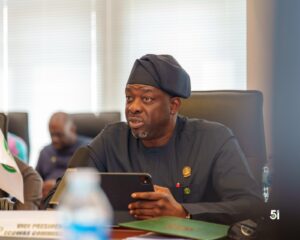
He noted that the transition to strategic dialogue reflected the evolving character of relations between the two institutions and their shared determination to make cooperation more responsive to emerging regional realities and development challenges.
Germany’s partnership with ECOWAS, which dates back to 1985, represents one of the longstanding development cooperation relationships supporting the regional organisation’s integration agenda.
Over the decades, the German government has committed approximately €494 million in bilateral technical and financial cooperation to ECOWAS, reflecting sustained investment in strengthening regional institutions, supporting development programmes and advancing the Community’s strategic objectives.
The partnership has received further reinforcement through an additional €49 million commitment for the 2025–2026 cooperation period, agreed during negotiations in November 2025.
The new funding package comprises €32.8 million in financial cooperation and €16.2 million in technical cooperation, bringing Germany’s cumulative bilateral commitments to approximately €543 million.
This substantial commitment underscores Germany’s continued confidence in the ECOWAS regional integration framework and its recognition of the strategic importance of West Africa to broader international development, economic cooperation and regional stability.
A particularly significant dimension of the partnership is the contribution of GIZ, which has remained an important technical cooperation partner to ECOWAS and its member states through institutional capacity development, policy support, technical expertise and implementation assistance across critical development sectors.
Through its longstanding engagement, GIZ has supported regional and national institutions in translating development priorities into practical programmes, strengthening governance structures and improving the institutional capacities required to deliver sustainable results.
Its technical cooperation approach has also contributed to advancing regional policy coordination, promoting cross-border collaboration and supporting the development of institutional mechanisms necessary for deeper economic and political integration.
For ECOWAS, such cooperation remains particularly important at a time when West Africa is confronting complex and interconnected challenges, including insecurity, violent extremism, economic vulnerabilities, climate-related pressures, institutional capacity gaps and the need to accelerate regional economic transformation.
The strategic dialogue therefore offers an opportunity for both parties to examine how existing cooperation mechanisms can be strengthened, while identifying emerging areas where German expertise, technical assistance and financial support could further advance the Community’s regional development agenda.
On behalf of the President of the ECOWAS Commission, H.E. General Birame Diop, Ogunjimi expressed profound appreciation to the German government for its sustained commitment, unwavering partnership and decades of support to the regional organisation and the people of West Africa.
He particularly acknowledged Germany’s contributions to the Community’s development aspirations, emphasising the importance of maintaining and strengthening partnerships that deliver tangible benefits to citizens across the region.
The engagement with Pfundt and the German delegation further reinforces the importance attached to sustained institutional dialogue between ECOWAS and its international development partners, particularly as the regional organisation seeks to consolidate its integration agenda and respond more effectively to the changing development landscape.
Beyond the financial commitments, the significance of the ECOWAS-Germany relationship lies in its continuity, institutional depth and the shared recognition that sustainable development in West Africa requires long-term cooperation, strong regional institutions and coordinated international support.
With Germany’s renewed commitment and the inauguration of a more strategic dialogue framework, both sides are positioning their partnership for a new phase of cooperation aimed at strengthening regional resilience, deepening integration and expanding development opportunities for the more than 400 million people of West Africa.


