
Business
AVECAL President, Spanish Footwear Giants Meet Ambassador Ikpeazu, Explore Nigeria Partnerships, Technology Transfer By Raymond Enoch

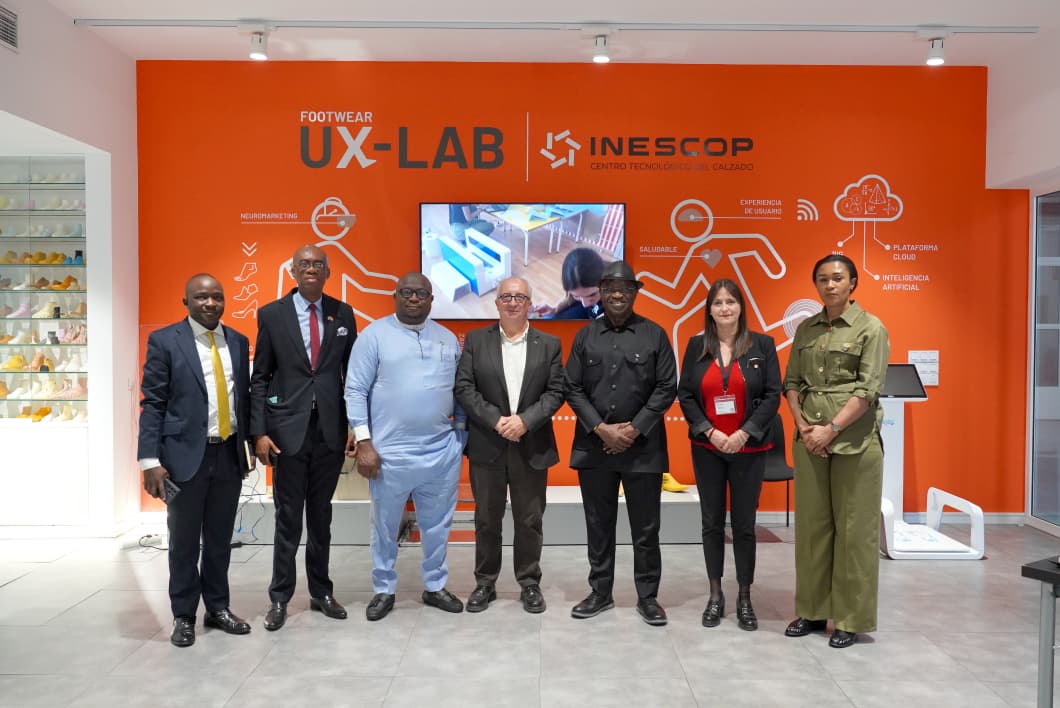
Nigeria’s drive to strengthen local manufacturing, attract foreign investment and expand the global competitiveness of its indigenous industries has received a potential boost as the country’s Ambassador to the Kingdom of Spain, His Excellency, Dr. Okezie Victor Ikpeazu, engaged leading Spanish footwear industry stakeholders in Alicante Province to explore strategic collaborations, technology transfer and business-to-business matchmaking.

The high-level engagement brought Ikpeazu face-to-face with Vicente Pastor Perez, President of the Valencian Association of Footwear Manufacturers Entrepreneurs (AVECAL), and representatives of INESCOP, Pikolinos and Hispanitas, opening fresh prospects for connecting Nigerian footwear manufacturers with Spain’s established industrial expertise, advanced production technologies and international business networks.
The discussions, held during the Ambassador’s visit to Alicante Province on Monday, November 2, 2026, focused on practical ways to strengthen technical capacity, improve manufacturing standards, facilitate knowledge exchange and establish mutually beneficial partnerships between Nigerian and Spanish footwear enterprises.
According to a statement issued by the Embassy of Nigeria in Madrid, Ambassador Ikpeazu was accompanied by Mr. Kimiebi Imomotimi Ebienfa, Senior Counsellor, and Mr. Likson Dadi, First Secretary.
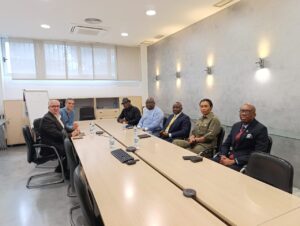
A central feature of the visit was the Ambassador’s engagement with INESCOP, a footwear technology centre in Elda, Alicante, a region renowned for its shoemaking heritage and established footwear manufacturing industry.
Received by the Director of Technologies and Materials, Elena Orgilés Calpena, the Nigerian delegation was taken on a tour of the facility to examine its technological capabilities, innovation infrastructure, manufacturing processes and adherence to international best practices.
INESCOP serves as a major technology and innovation hub for the footwear industry, working with more than 400 member companies across different countries to advance footwear design, materials development and manufacturing processes.
Discussions at the centre explored opportunities for technical cooperation, innovation, quality assurance and capacity-building programmes that could be adapted to the needs of Nigerian footwear manufacturers.
Particular attention was given to specialised training, technology transfer, quality management, certification and sustainable production methods that could strengthen the technical capabilities of Nigerian shoemakers, enterprises and industry-support organisations.
The engagement also offered the Nigerian delegation an opportunity to identify transferable technologies and training models capable of helping local manufacturers improve productivity, modernise production systems and meet increasingly demanding quality standards.
For Nigeria, where indigenous entrepreneurs have demonstrated considerable ingenuity in producing different categories of footwear, often through manual processes and with limited access to advanced manufacturing technology, the proposed cooperation offers an opportunity to bridge critical technical gaps and unlock the industry’s wider economic potential.
At separate engagements involving AVECAL, Pikolinos and Hispanitas, Ambassador Ikpeazu highlighted the resourcefulness and entrepreneurial spirit of Nigerian footwear producers, emphasising the importance of connecting their existing capabilities with Spain’s experience in modern footwear design, production and industrial development.
He reaffirmed the Nigerian Embassy’s readiness to facilitate direct engagements between interested Nigerian entrepreneurs and Spanish industry stakeholders to promote collaboration, business-to-business matchmaking and the development of practical commercial relationships.
The proposed initiative is expected to provide a platform for Nigerian manufacturers seeking technical partnerships, improved production processes, specialised skills and opportunities to expand their market reach.
Discussions with AVECAL’s president focused on establishing structured partnerships through knowledge-sharing platforms, the exchange of industry best practices and potential joint programmes to support the growth and competitiveness of Nigerian footwear enterprises.
The association’s willingness to collaborate with the Nigerian Embassy emerged as a significant outcome of the discussions, with Perez assuring Ikpeazu that AVECAL would work with the mission to establish the necessary arrangements for facilitating engagement between Spanish businessmen and their Nigerian counterparts.
Such cooperation could provide Nigerian footwear manufacturers with access to a wider network of industry professionals and technical institutions, creating opportunities to explore production partnerships, skills development and other forms of industrial collaboration.
The Ambassador’s engagement with representatives of Pikolinos also examined practical industry insights, production processes and possible areas of cooperation that could help Nigerian producers modernise their operations and improve their competitiveness.
Similarly, his visit to Hispanitas’ facilities and AVECAL’s headquarters formed part of efforts to deepen institutional and commercial ties between the footwear industries of both countries.
Beyond the immediate discussions, the engagements reflected a broader economic diplomacy initiative aimed at connecting Nigerian shoe manufacturers with Spanish counterparts capable of supporting the transfer of technical knowledge, improved manufacturing practices and industry expertise.
Ambassador Ikpeazu underscored the potential benefits of stronger cooperation with Spain’s established footwear cluster in the Valencia region, particularly Alicante, identifying technology transfer, specialised training and sustained dialogue as important drivers of industrial development.
He emphasised that improving access to modern manufacturing technologies and technical expertise would help Nigerian producers upgrade local production capacity, enhance product quality and compete more effectively in domestic and international markets.
The Spanish industry representatives, in turn, expressed readiness to explore concrete avenues of cooperation, including technical exchanges, training attachments and knowledge-sharing initiatives designed to deliver mutual benefits.
These prospective arrangements could provide Nigerian technicians and entrepreneurs with exposure to contemporary footwear design, production systems and operational standards while creating opportunities for Spanish businesses to develop relationships with Nigerian industry players.
The significance of the engagement extends beyond footwear production to Nigeria’s wider manufacturing ambitions, particularly the need to strengthen indigenous enterprises, create employment opportunities, encourage innovation and develop industries capable of contributing to economic diversification.
With appropriate technical partnerships and sustained institutional support, Nigeria’s footwear sector could benefit from improved production efficiency, better product finishing, stronger quality assurance and enhanced access to international markets.
The visit also aligns with the Nigerian government’s ongoing economic reform agenda under President Bola Ahmed Tinubu, GCFR, particularly efforts to attract foreign direct investment, promote manufacturing and establish partnerships that support sustainable economic development.
For the Nigerian Mission in Spain, the engagement demonstrates how economic diplomacy can serve as a practical bridge between domestic industrial priorities and international expertise, helping Nigerian businesses identify opportunities beyond conventional diplomatic and commercial engagements.
The immediate challenge, however, will be translating the discussions into concrete programmes, with clear implementation arrangements for training, technical exchanges, business matchmaking and sustained cooperation between interested manufacturers.
If effectively pursued, the proposed Nigeria-Spain footwear industry partnership could help transform existing entrepreneurial ingenuity into stronger manufacturing capacity, positioning Nigerian producers to take advantage of emerging opportunities in the domestic, African and international footwear markets.


