
Business
ECOWAS Member States Renew Commitment to Abidjan–Lagos Corridor Highway Projects, Mobilize Financing for West Africa’s most Transformative infrastructure initiative. By Raymond Enoch

West Africa’s ambition to deepen regional integration, accelerate economic transformation and dismantle longstanding barriers to cross-border trade has received renewed impetus as five member states of the Economic Community of West African States (ECOWAS) reaffirmed their commitment to advancing the Abidjan–Lagos Corridor Highway Development Project towards the construction phase.
The landmark infrastructure initiative, designed to connect Côte d’Ivoire, Ghana, Togo, Benin and Nigeria through a six-lane supranational highway, is increasingly emerging as a strategic investment in the region’s economic future, with the potential to reshape transportation, facilitate trade, strengthen regional connectivity and unlock new opportunities for businesses and communities across West Africa.
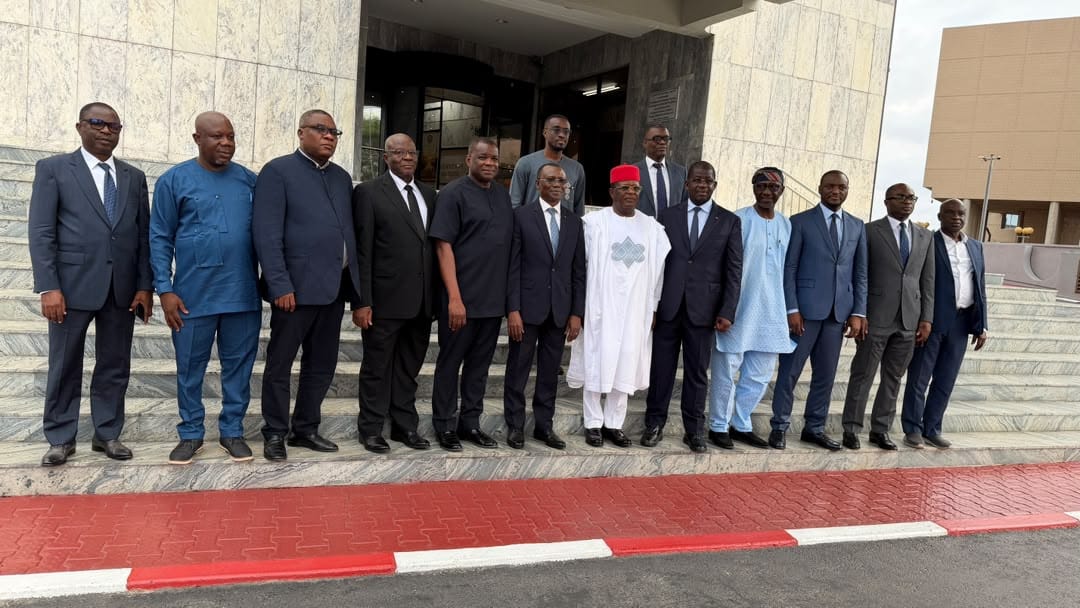
At a statutory meeting held in Lomé, Togo, on October 30, 2026, the Ministerial Steering Committee of the Abidjan–Lagos Corridor Highway Development Project endorsed the first set of highway sections for progression to the construction stage, while stressing the need to ensure continuity between sections as the project is implemented in phases.
The meeting brought together ministers, engineers, senior government officials and development partners from the five participating countries to deliberate on construction phasing, right-of-way acquisition and the mobilisation of financial resources required to move the ambitious regional project from planning to physical implementation.
The decisions underscore a growing recognition among the participating governments that the corridor’s success will depend not only on the construction of individual road sections but also on the coordinated delivery of an integrated highway network capable of supporting seamless cross-border movement.
Chairman of the Ministerial Steering Committee and Nigeria’s Minister of Works, Engr. David Nweze Umahi, emphasised the importance of harmonising the efforts of all five member states to sustain momentum and ensure that the project progresses into its next critical phase.
His position reflects the strategic importance of cooperation among the participating countries, particularly in coordinating construction schedules, securing the required land and ensuring that financing arrangements are aligned to prevent delays and disruptions along the corridor.
For a project spanning five national territories, continuity between construction sections is central to achieving its intended benefits. A fragmented implementation approach could undermine the efficiency of the highway, increase logistical complications and delay the economic advantages expected from a fully connected regional transport network.
The ministers from Ghana, Togo, Côte d’Ivoire and Benin also highlighted the transformative economic prospects of the highway, renewing their commitment to ensuring that the project advances to the construction stage.
They called on the Abidjan–Lagos Corridor Management Authority (ALCoMA), ECOWAS, the African Development Bank (AfDB), country engineers and other stakeholders to strengthen their support for participating governments as they work to mobilise the resources needed to meet the project’s financial obligations.
A key priority is securing funding for right-of-way acquisition, alongside the debt and equity contributions required to finance construction.
Right-of-way acquisition remains a crucial implementation consideration because the timely provision of land for the proposed highway will be essential to delivering construction activities according to schedule. Equally, the ability of participating countries to meet their respective financial commitments will influence the pace at which approved sections can move from preparatory work to actual construction.
The renewed emphasis on financing therefore places the spotlight on the need for sustained cooperation between national governments, regional institutions and development finance partners to bridge funding requirements and maintain the project’s implementation momentum.
Beyond its physical infrastructure, the Abidjan–Lagos Corridor Highway represents a broader regional integration agenda aimed at improving the movement of people, goods and services across some of West Africa’s most economically significant markets.
By connecting major urban centres and commercial hubs along the Atlantic coast, the highway is expected to strengthen regional supply chains, improve access to markets and create opportunities for investment in logistics, manufacturing, tourism, agriculture and other productive sectors.
For traders and businesses operating across the five countries, improved road connectivity could help reduce transport bottlenecks and make cross-border commercial activities more efficient. It could also support the development of industrial and commercial clusters along the corridor, potentially expanding employment opportunities and strengthening economic cooperation among neighbouring states.
The project also aligns with ECOWAS’ wider regional integration objectives, particularly the promotion of interconnected infrastructure systems that can support intra-African trade and improve the competitiveness of West African economies.
However, translating these ambitions into measurable economic gains will require more than political declarations. Coordinated implementation, predictable financing, timely land acquisition and effective collaboration among the participating countries will be critical to ensuring that the project delivers a continuous, functional highway rather than disconnected stretches of infrastructure.
The Lomé meeting consequently represents an important step in maintaining political commitment while addressing some of the practical requirements for moving the initiative forward.
With the first set of sections endorsed for progression to construction, attention is now increasingly focused on how quickly the participating governments and their development partners can mobilise the necessary resources, complete outstanding preparatory requirements and coordinate the phased delivery of the six-lane highway.
For ECOWAS, the stakes extend beyond transportation infrastructure. The successful execution of the Abidjan–Lagos Corridor Highway could provide a significant boost to regional economic integration, demonstrating how collective investment in strategic infrastructure can help transform shared geographical and economic interests into tangible development outcomes.
As the five countries renew their commitment to the project, the challenge ahead will be to sustain that political will through the financing, engineering coordination and implementation discipline required to bring West Africa’s ambitious regional highway vision closer to reality.


